
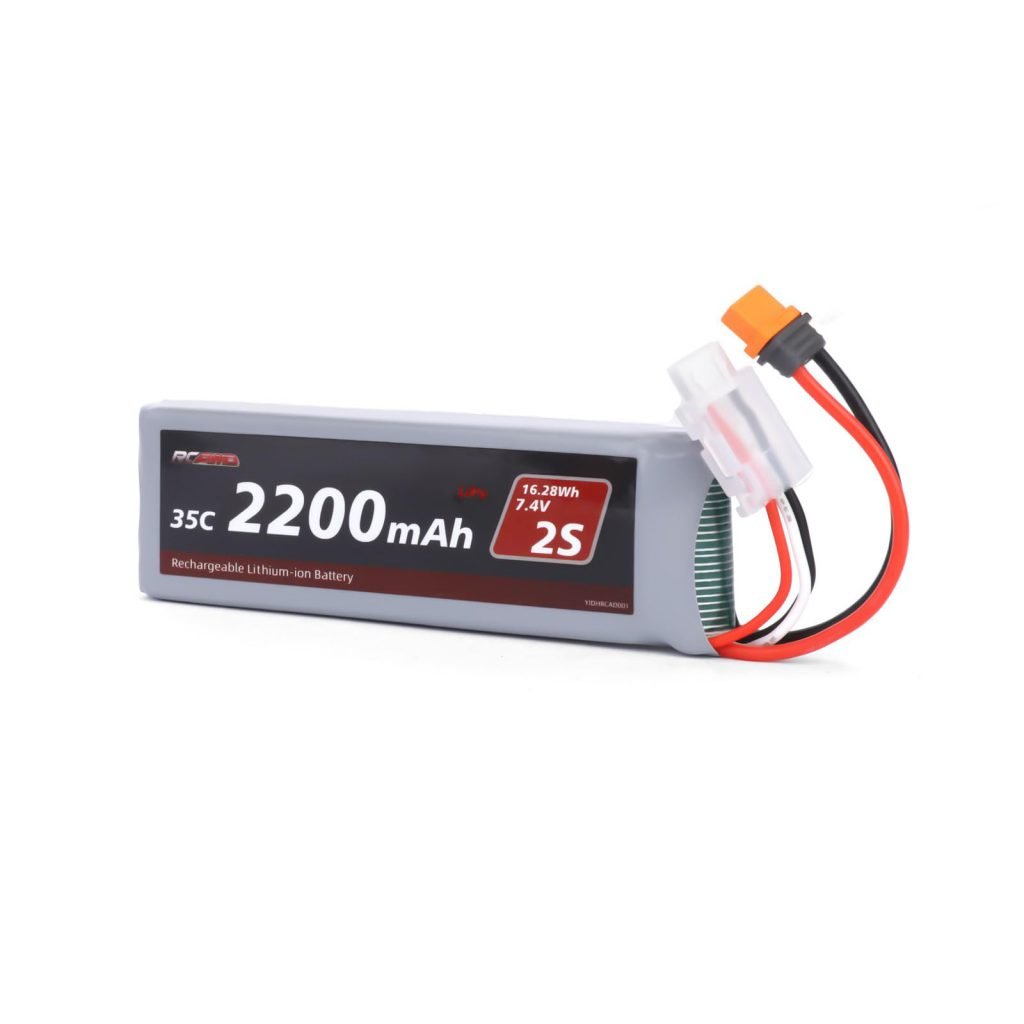
When it comes to powering RC vehicles, drones, or portable electronics, LiPo (Lithium Polymer) batteries are the go-to choice for hobbyists and professionals alike. Among the most common LiPo configurations are 2S and 3S batteries, each offering distinct advantages depending on your device’s needs. If you’re torn between a 2S vs 3S LiPo battery—especially the popular 2200mAh 60C variants—this guide breaks down their key differences, compatibility, and ideal applications to help you make an informed decision.
LiPo batteries are categorized by their “S” rating, which refers to the number of lithium-ion cells connected in series. A 2S LiPo has 2 cells in series, while a 3S LiPo has 3 cells. This difference in cell count directly impacts voltage, power output, and overall performance—factors that can make or break your device’s functionality. Below, we’ll compare the 2200mAh 2S 60C and 2200mAh 3S 60C LiPo batteries side by side, then address a common question: Are 2S and 3S LiPo batteries compatible?
2S vs 3S LiPo Comparison Table (2200mAh 60C)
To make the comparison clear, we’ve focused on two identical capacity (2200mAh) and discharge rate (60C) LiPo batteries, differing only in their cell count (2S vs 3S). This ensures a fair comparison of how the “S” rating impacts performance without other variables clouding the results.
| Feature | 2200mAh 2S 60C LiPo | 2200mAh 3S 60C LiPo |
|---|---|---|
| Voltage (Nominal) | 7.4V (Each cell = 3.7V; 2 cells × 3.7V) | 11.1V (Each cell = 3.7V; 3 cells × 3.7V) |
| Voltage (Max Charged) | 8.4V (4.2V per cell) | 12.6V (4.2V per cell) |
| Power (Max Discharge) | 132W (2200mAh × 60C ÷ 1000 = 132W) | 198W (2200mAh × 60C ÷ 1000 = 198W) |
| Size (Typical) | 100mm × 35mm × 22mm (varies by brand, but compact) | 102mm × 35mm × 30mm (slightly thicker due to extra cell) |
| Weight (Typical) | 85–90g (lightweight, ideal for small devices) | 120–125g (heavier, due to the third cell) |
| Runtime (Approximate) | 15–25 minutes (depends on device; longer for low-power setups) | 10–20 minutes (shorter, as higher voltage draws more current) |
| Charge Time (1C Charger) | 60–70 minutes (2200mAh ÷ 2200mA = 1 hour) | 60–70 minutes (same capacity, so charge time is nearly identical at 1C) |
| Applications | Small RC cars, micro drones, RC boats, beginner-level RC planes, portable LED lights, small robots | Medium RC cars, racing drones, 3D RC planes, high-performance RC boats, RC helicopters, advanced robots |
Key Takeaways from the 2S vs 3S LiPo Comparison
From the table above, the biggest difference between 2S and 3S LiPo batteries (with the same capacity and discharge rate) is voltage and power. A 3S LiPo delivers 50% more voltage (11.1V vs 7.4V) and 50% more max power (198W vs 132W) than a 2S LiPo. This makes 3S batteries ideal for devices that need more speed, torque, or lifting power—like racing drones or high-performance RC cars.
On the other hand, 2S 7.4V LiPo batteries are lighter, more compact, and offer longer runtime for low-power devices. They’re also more affordable in some cases and are a better choice for beginners or devices with limited space (like micro drones or small RC vehicles).
Notably, charge time is nearly the same for both batteries when using a 1C charger, as they have the same capacity. The main tradeoff is weight and size: 3S batteries are slightly bulkier and heavier, which can affect the balance and performance of small devices.
Are 2S and 3S LiPo Batteries Compatible?
The short answer is: No, 2S and 3S LiPo batteries are not directly compatible with the same device—unless the device is specifically designed to support both voltages.
Here’s why:
Most RC devices, drones, or electronics are engineered to work with a specific voltage range. A device designed for a 2S LiPo (7.4V nominal) will not handle the higher voltage of a 3S LiPo (11.1V nominal). Using a 3S LiPo in a 2S-only device will likely damage the motor, ESC (Electronic Speed Controller), or other electronic components—possibly causing overheating, burnout, or even a fire.
Conversely, using a 2S LiPo in a device designed for 3S will result in insufficient power. The device may run sluggishly, fail to reach full speed, or not work at all, as the voltage is too low to power the motor or electronics effectively.
There is an exception: some high-end devices (like certain RC cars or drones) have adjustable ESCs that can support a range of voltages (e.g., 2S–3S). In these cases, you can switch between 2S and 3S LiPo batteries, but you must first confirm the device’s voltage rating in the user manual. Always check the manufacturer’s specifications before swapping battery types.
Which Should You Choose: 2S or 3S LiPo?
The choice between 2S and 3S LiPo depends on your device and needs:
- Choose 2S LiPo if: You have a small device (micro drone, small RC car), need longer runtime, prioritize lightweight design, or are a beginner. 2S batteries are also more forgiving and less likely to damage entry-level equipment.
- Choose 3S LiPo if: You need more power, speed, or torque (e.g., racing drones, high-performance RC cars), have a device designed for 11.1V, or want to upgrade your setup for better performance. Keep in mind the extra weight and shorter runtime.
Remember: Always use a LiPo charger designed for your battery’s cell count (2S or 3S) to avoid overcharging, which can be dangerous. Never mix 2S and 3S batteries in a series or parallel configuration unless you have advanced knowledge of LiPo battery safety and wiring.
Final Thoughts on 2S vs 3S LiPo
2S and 3S LiPo batteries are both excellent choices, but they serve different purposes. The 2200mAh 60C variants are popular because they offer a balance of capacity and discharge rate for most hobbyist devices. When comparing 2S vs 3S LiPo, focus on your device’s voltage requirements, power needs, and size/weight constraints—this will guide you to the right battery.
Whether you’re a beginner or an experienced hobbyist, understanding the differences between 2S and 3S LiPo batteries will help you get the most out of your devices, avoid damage, and enjoy a better overall experience.
