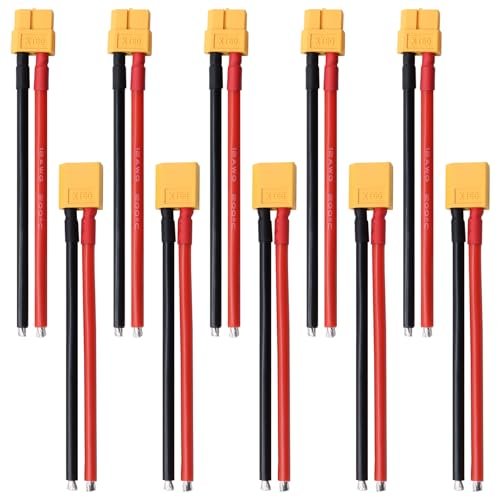
The classification of an RC car as brushed or brushless hinges on two interdependent components: the motor and the electronic speed controller (ESC). These systems are fundamentally incompatible—a brushed motor requires a brushed ESC (with 2 output wires), while a brushless motor pairs with a brushless ESC (featuring 3 output wires).
Why Your Motor Choice Defines the RC Experience?
Every radio-controlled vehicle pulses with energy drawn from its power system—a complex interplay between motor and electronic speed controller (ESC). The brushed vs brushless distinction transcends mere component choice; it fundamentally shapes speed, torque response, maintenance rituals, and even driving psychology. For beginners scaling dusty trails or veterans chasing podium finishes, understanding this core technology unlocks tailored performance. We dissect real-world cases, technical nuances, and hidden trade-offs to guide your next upgrade.
Case 1: Entry-Level RC Car Transformation (Duratrax Evader BX)
Original Brushed Setup: 20T brushed motor + 320A waterproof ESC (e.g., BDESC-S10E-RTR) + NiMH battery.
Performance Profile: ~25 km/h top speed, 15-minute runtime, moderate cogging during low-speed maneuvers.
Upgraded Brushed Path: Swapped to 15T motor + ball bearings → 18% torque gain but accelerated brush wear.
Case 2: Brushed to Brushless RC Car
Components: Hobbywing 3650-size 3300KV sensorless motor + 60A ESC + 2S LiPo
Quantified Gains:
Speed surge to 48 km/h (+92%)
Runtime extension to 22 minutes (+47%)
Elimination of brush maintenance cycles
Thermal efficiency jump from 65% → 88%
Case 3: Competition-Grade Brushless RC Car (Castle Creations Setup)
System: Sensored brushless 1410 3800KV motor + Sidewinder 4 ESC w/Cryo-Drive + 3S LiPo
Track Impact:
0-60 km/h acceleration in 2.1 seconds
Precision throttle modulation via Bluetooth tuning
IP67 waterproofing for all-weather reliability
Brushed vs. Brushless Motors
| Characteristic | Brushed Motor | Brushless Motor | Key Implications |
|---|---|---|---|
| Working Principle | Mechanical commutation (brushes/commutator) | Electronic commutation (ESC phase control) | Brushless avoids friction-induced energy loss4 |
| Efficiency | 50–70% | 80–95% | Longer runtimes + reduced heat stress7 |
| Torque Profile | High initial torque, linear delivery | Programmable curve (FOC for linearity) | Brushless excels in dynamic load response5 |
| Maintenance Cycle | Brush/commutator replacement every 10–20hrs | Bearings only (50+ hrs) | Cost of ownership favors brushless long-term3 |
| Acoustic Signature | Audible whine + brush chatter | Near-silent (PWM hum only) | Stealth advantage for brushless7 |
| Advantages | • Lower entry cost ($20–50) • Simplified wiring • Forgiving voltage sag | • Higher power density • Water/dust resistance • ESC telemetry logging | Budget vs. capability tradeoff37 |
| Disadvantages | • Commutator arcing limits max RPM • Carbon dust contamination • Peak power decays with wear | • Sensitive to low-quality batteries • Complex ESC pairing • Higher initial investment ($80–$300) | Reliability vs. accessibility tension57 |
Performance Physics:
- Turns (T): Dictates wire coil wraps. Lower turns (e.g., 10T) = higher RPM/torque but 30% shorter battery life; ideal for sprint tracks. Higher turns (e.g., 27T) suit endurance crawlers.
- KV Rating: Brushless-specific RPM/volt metric. A 3800KV motor hits 31,920 RPM at 8.4V. Low KV (≤2000) dominates rock crawling; high KV (≥5000) fuels speed runs.
Here is an in-depth article explaining the electric motors of RC cars.
Brushed vs Brushless RC Drift Cars
Drifting’s Unique Demands: Requires millisecond throttle adjustments, cog-free startup, and thermal stability during sustained slides.
Brushed Drift Example: Tamiya TT-02 with 25T motor + Tamiya TEU-104BK ESC
Limitations:
- Brush wear accelerates during counter-steer transitions
- Voltage drop causes “dead zones” in throttle response
- ~12-minute battery life with 5000mAh NiMH
Brushless Drift Solution: Yokomo YD-2 + Hobbywing XeRun AXE 1900KV sensored system
Advantages:
- Sensor feedback eliminates low-speed cogging
- FOC (Field-Oriented Control) mimics brushed linearity
- Drag brake tuning for clutch-kick simulations
- 22+ minute runtime on 5000mAh LiPo
RC Drift Car Performance Comparison:
| Metric | Brushed | Brushless |
|---|---|---|
| Throttle Resolution | 7-bit granularity | 12-bit micro-adjustments via ESC |
| Slide Sustainment | Fades after 45sec continuous drift | Unlimited (temp-limited by ESC cooling) |
| Upgrade Cost | $30–60 (motor only) | $150–220 (motor + ESC combo) |
Brushless vs Brushed RC Car Which One Is Better?
Selecting between brushed and brushless systems hinges on aligning technology with use-case psychology. Brushed motors retain relevance for newcomers prioritizing cost predictability and low-speed control simplicity—think $150 RTR crawlers or indoor drift platforms where thermal stress remains minimal. Their gradual power decay even serves as a “training wheel” effect for throttle discipline. Conversely, brushless dominates when chasing quantifiable performance: A 3300KV system converts 40% more battery energy into motion than equivalent brushed setups, slashing lap times by 15–22% in club racing. Sensored brushless ESCs now decode rotor position 8,000 times/second, delivering brushed-like smoothness without wear penalties—proven in pro-level drift chassis like MST RMX 2.5. Budget constraints shouldn’t override physics: A $90 brushless upgrade kit often pays back via eliminated brush replacements and LiPo compatibility within 6 months of aggressive use. Ultimately, terrain dictates tech; rock gardens demand brushed torque linearity, while high-grip tracks necessitate brushless RPM headroom.
For technical driving (crawling/drifting), sensored brushless systems (e.g., Hobbywing AXE) hybridize the best of both worlds: FOC software emulates carbon-brush throttle curves, while solid-state reliability unlocks waterproof bashing.
The brushed vs. brushless debate isn’t about superiority—it’s about application. Brushed systems remain viable for entry-level and niche uses, but brushless dominates performance-driven categories. Brushed systems shine below $200 and under 30km/h; brushless governs beyond those thresholds. Modern ESCs now blur the lines: Hobbywing’s QuickRun 1060 ($25) revitalizes brushed motors with LiPo support, while Castle’s Mamba X enables brushless smoothness at 1/10 crawler speeds. As ESC technology advances (FOC, Bluetooth tuning) and costs decrease, brushless increasingly becomes the default for serious hobbyists. Ultimately, your driving style, budget, and terrain dictate the optimal choice.